

Written by: Maternity Exercise Academy. Commercial partnership.
The pelvic floor is often referred to as the most important muscle group for women—and for good reason. The pelvic floor muscles perform several important functions in the body, which is why it’s important to take care of them throughout your life. To take care of your pelvic floor, you need to identify the correct muscles and learn how to activate them. In this blog post, we’ll go over where the pelvic floor muscles are located and how to use them.
A Peek in the Mirror
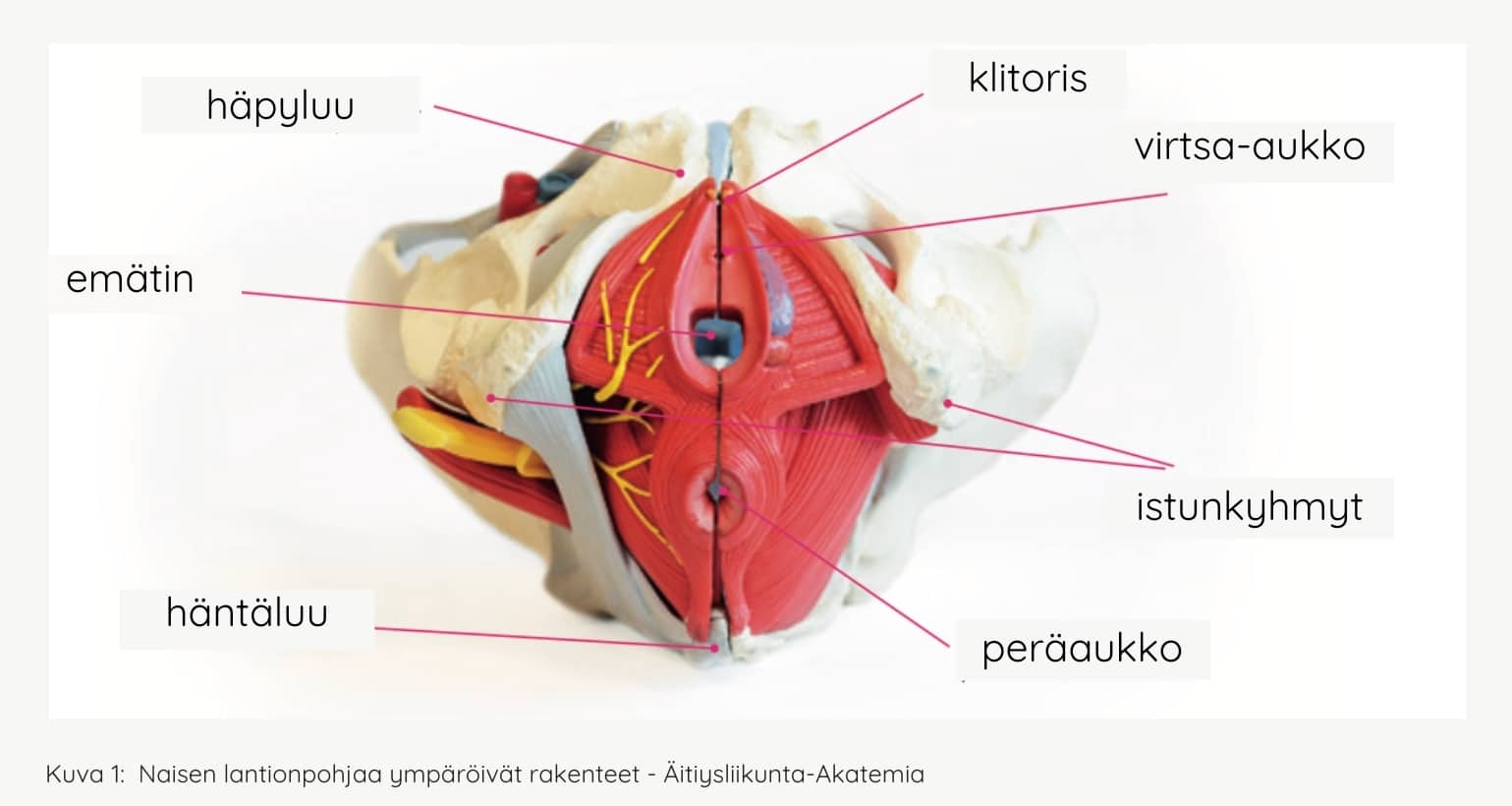
The pelvic floor muscles are located between the pelvic bones and form the lowest structure in our bony pelvis. These muscles support the internal organs above them, the lowest of which in women are the bladder, uterus, and rectum. Many people consider lower abdominal tension to be part of pelvic floor tension. However, it’s important to go a little deeper to make proper contact with the correct muscles. Looking down at your lower abdomen in a mirror can be a good way to start getting familiar with and locating the pelvic floor muscles.
Here's how to do it:
- Find a quiet space and take a moment for yourself
- Take a peek at your lower body with a hand mirror, or place the mirror on a low surface so you can stand above it
- In the mirror, you can see the opening of the urethra, the vaginal opening, and the anus
- Try contracting your pelvic floor as if you were stopping the flow of urine
- When you contract, you should see your vagina and anus close and your perineum shorten
- As they relax, the openings widen and the perineum lengthens
If you find the mirror recognition exercise uncomfortable, you can also try the recognition exercise using a small ball.
In that case, do the following:
- Place a small ball (e.g., a tennis ball) on top of a hard bench
- Sit on the ball so that it is positioned between your sitting bones
- Gently contract your anus, vagina, and urethra inward and upward
- You should feel pressure and tightness against the ball during a contraction and, conversely, feel the pressure ease as you relax.
The Muscular Structures of the Pelvic Floor and Their Functions
The pelvic floor muscles consist of a total of three distinct muscle layers that run between the pubic bone and the tailbone, between the ischial tuberosities, and around the openings. Each muscle layer has its own important functions. Among other things, the pelvic floor muscles are responsible for:
- urinary, fecal, and gas continence
- Prevention of Gynecological Prolapse
- sexual pleasure
- good posture and body alignment
- deep core support
- Bladder and bowel functions

What if the pelvic floor doesn't work?
Throughout the course of a woman’s life, many factors affect pelvic floor function, which is why women of very different ages may experience pelvic floor symptoms. Stress, physical strain, bowel problems such as constipation, being overweight, pregnancies, childbirth, and menopause are examples of factors that place strain on the pelvic floor. The most common pelvic floor symptoms include urinary, gas, and fecal incontinence; gynecological prolapse and the resulting sensation of pressure; and difficulties with urination and bowel movements. Various types of pain, such as pain during intercourse and cramps, also indicate pelvic floor dysfunction, as do difficulties with sexual function.
A healthy and functional pelvic floor serves as a strong foundation for the lower pelvis. It is able to engage during movement and, for example, when exerting force, but is also relaxed enough to absorb stress. We often get it wrong by focusing solely on strengthening the pelvic floor muscles while completely neglecting to relax them. Tense or even tight pelvic floor muscles can cause symptoms very similar to those of weak muscles. It’s also very common to activate the wrong muscles—such as the abs, glutes, and thighs—when training the pelvic floor. In such cases, it’s important to take your time doing awareness exercises to find the right spot.
The Connection Between the Pelvic Floor and Breathing
The pelvic floor muscles do not function in isolation within the body; rather, they are part of a larger system. One of the most important skills for both relaxing and strengthening the pelvic floor is breathing deeply enough to restore its spontaneous movement. So, we’re going to share an important exercise with you that will help your breathing and pelvic floor muscles work together, keeping your pelvic floor active at all times—without the need for separate contractions!
For more information on pelvic floor exercises, we recommend reading the post “Pelvic Floor Muscle Exercises—How and When?” on the Maternity Exercise Academy blog .
